

The Alfama neighborhood in Lisbon has a woman’s name, that of a Portuguese woman but with Muslim features that instill a special character in her. She makes you fall in love without being aware of doing so. She is neither conceited nor vain, she doesn’t know how to flirt, she doesn’t master the art of seduction and, yet, she seduces anyone without intending to. She is rather clumsy, even scruffy, so much so that, at first glance, her worn-out clothes and deceptive lack of appeal can frighten away potential suitors. But the languid air she gives off while walking, her perfume scented with the right doses of decadence and that distracted pose of indolence trap you and you can do nothing more than admire her.

Even though she hides through ruas and becos, wandering between shyness and mischief, or effortlessly climbs impossible slopes so you won’t follow her, you will follow her with the determination to travel her body from top to bottom. If by an extraordinary stroke of luck you succeed, her skin will leave you with a taste between sweet and salty, tasting like the Tagus River with a final hint of the ocean. And the thing is that Alfama feels comfortable living like this, between dualities. She enjoys being the owner and lady of her imposing castle but she likes even more to feed the pigeons in her modest portal of faded azulejos.
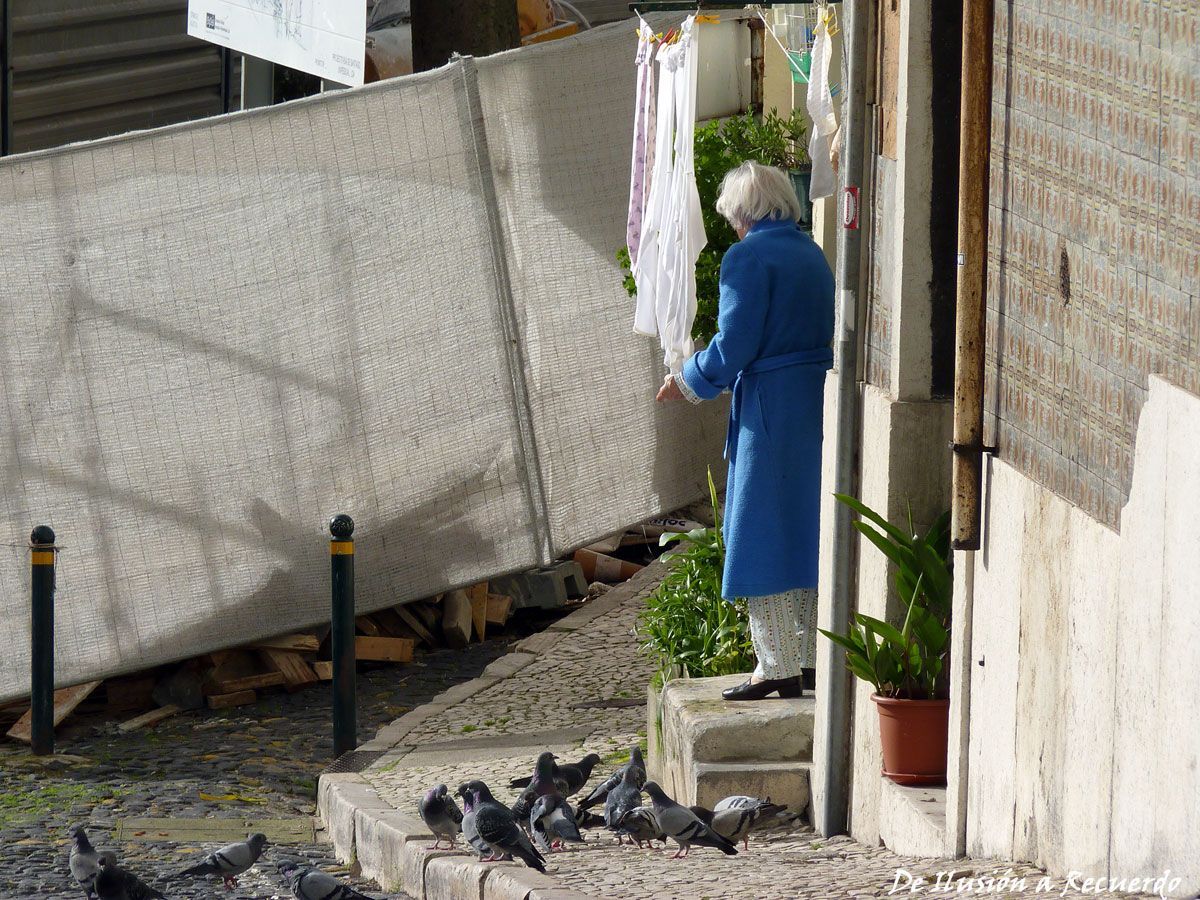
At times, you will find her immersed in melancholy, sometimes cradled by a fado and other times with the background litany of the oldest fishermen recalling, stationed in the tavern, old Lisbon stories with hints of legend. She thus takes refuge in that kind of saudade where she feels so comfortable, safe from prying eyes and possible ever-threatening misfortunes. Alfama, with the maturity that years give her, knows she is strong even if she exudes fragility; she has survived the shaking of the earth and would know how to defend herself well against the roar of fire. Not all can boast of that.
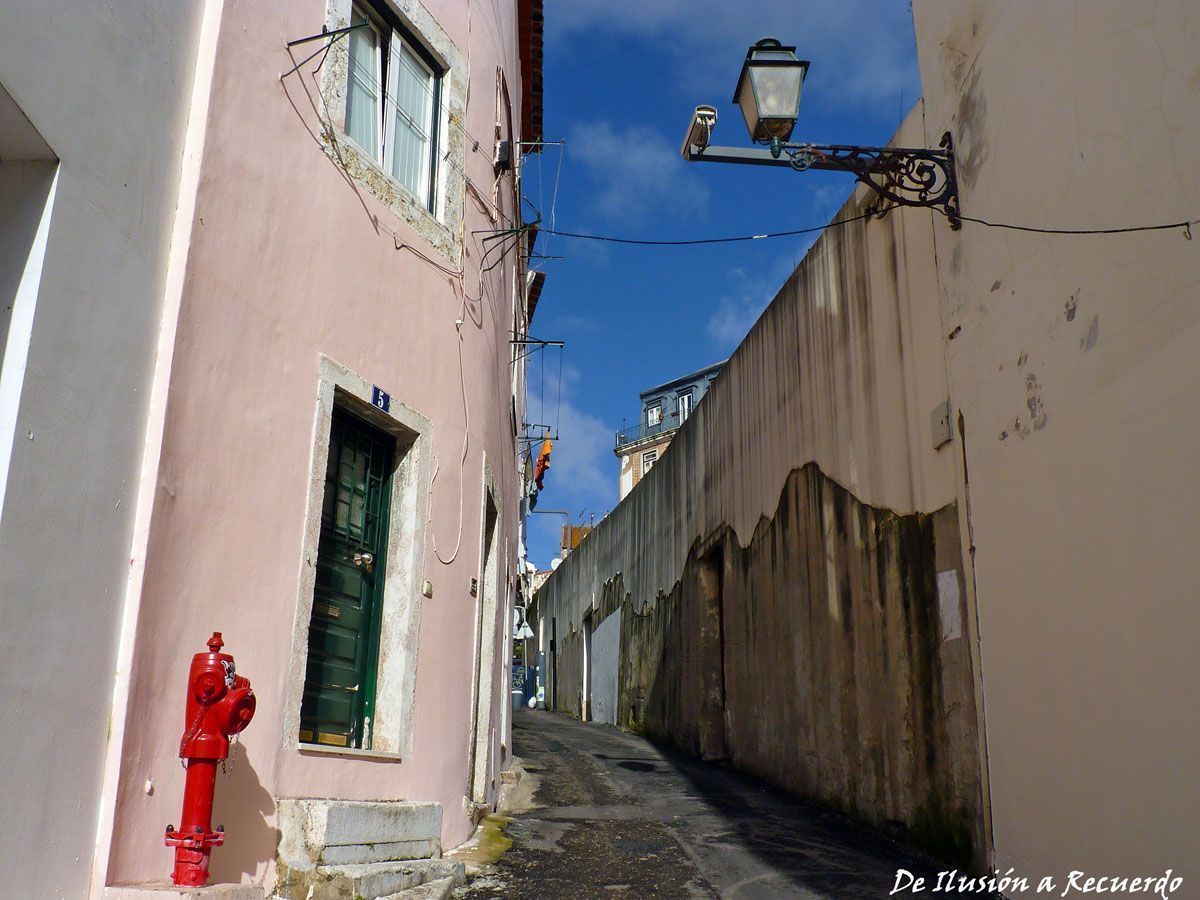
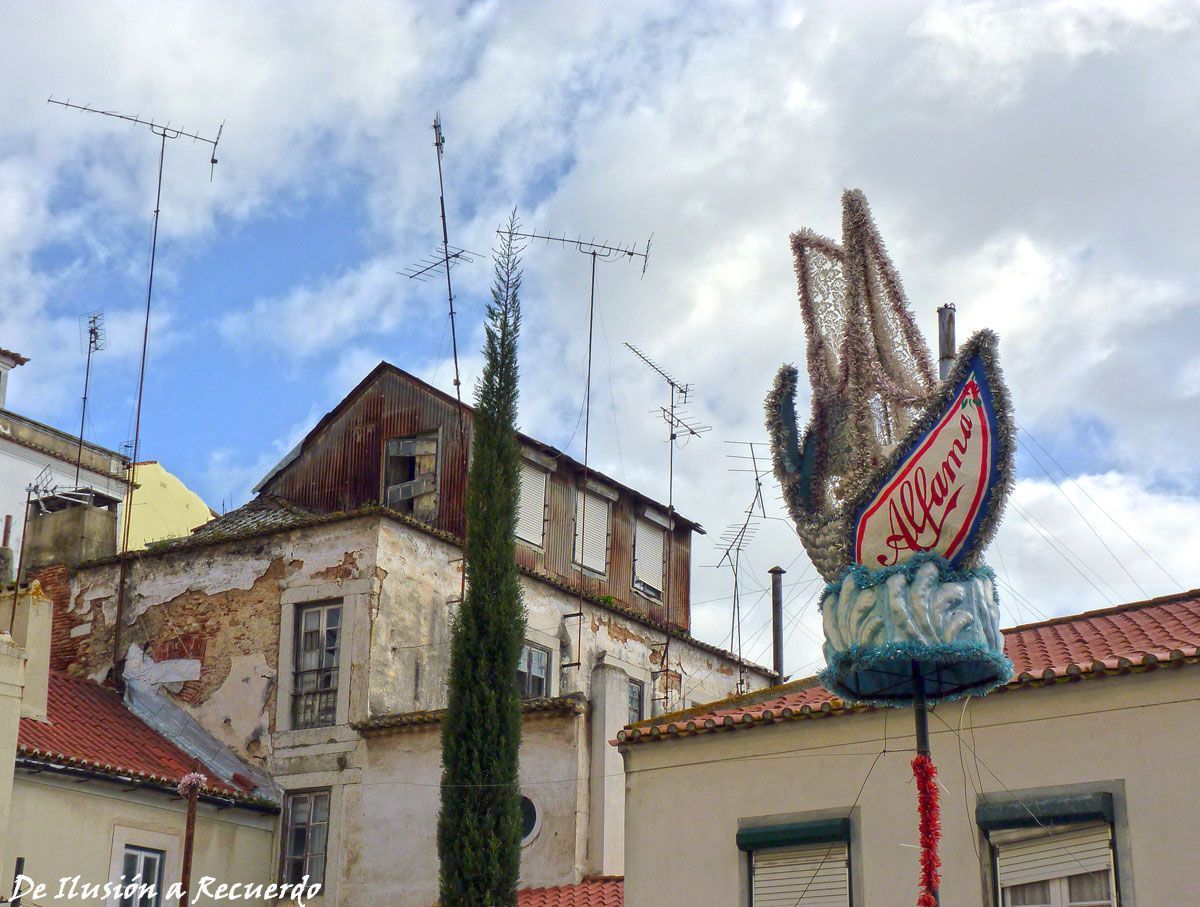
But showing off once again her marked duality, she suddenly abandons that almost feverish state to stretch out to a party rhythm with a smile of carnations appearing on her lips. She will then run to deck out balconies with manjericos and garlands, impatient to dance in the squares, to walk through the streets crowded with people, to stroll arm in arm with her Anthony who is a saint and indulges her in everything on those nights. She always ends up exhausted with happiness, with the smell of wine and sardines floating in the air for days; it doesn’t want to leave no matter how much Alfama ventilates by opening the windows. And she, deep down, doesn’t want it to disappear either.
Perhaps after the hangover, she remembers some sin committed under the excess of the street party and, if that inflicted slip is serious enough to keep her awake, she might even go to confess it at the Sé Cathedral. Perhaps upon arriving there she regrets having gone; her bohemian spirit will convince her that the fault is really not that great. Knowing her, she will sit on one of the benches opposite to wait for the tram to pass, and when it does, Alfama cannot help but smile like a little girl. It will be that moment, that childish gesture, that false innocence that will make you fall madly in love with her and repeat the trip to Lisbon again and again with the hope of being reciprocated.
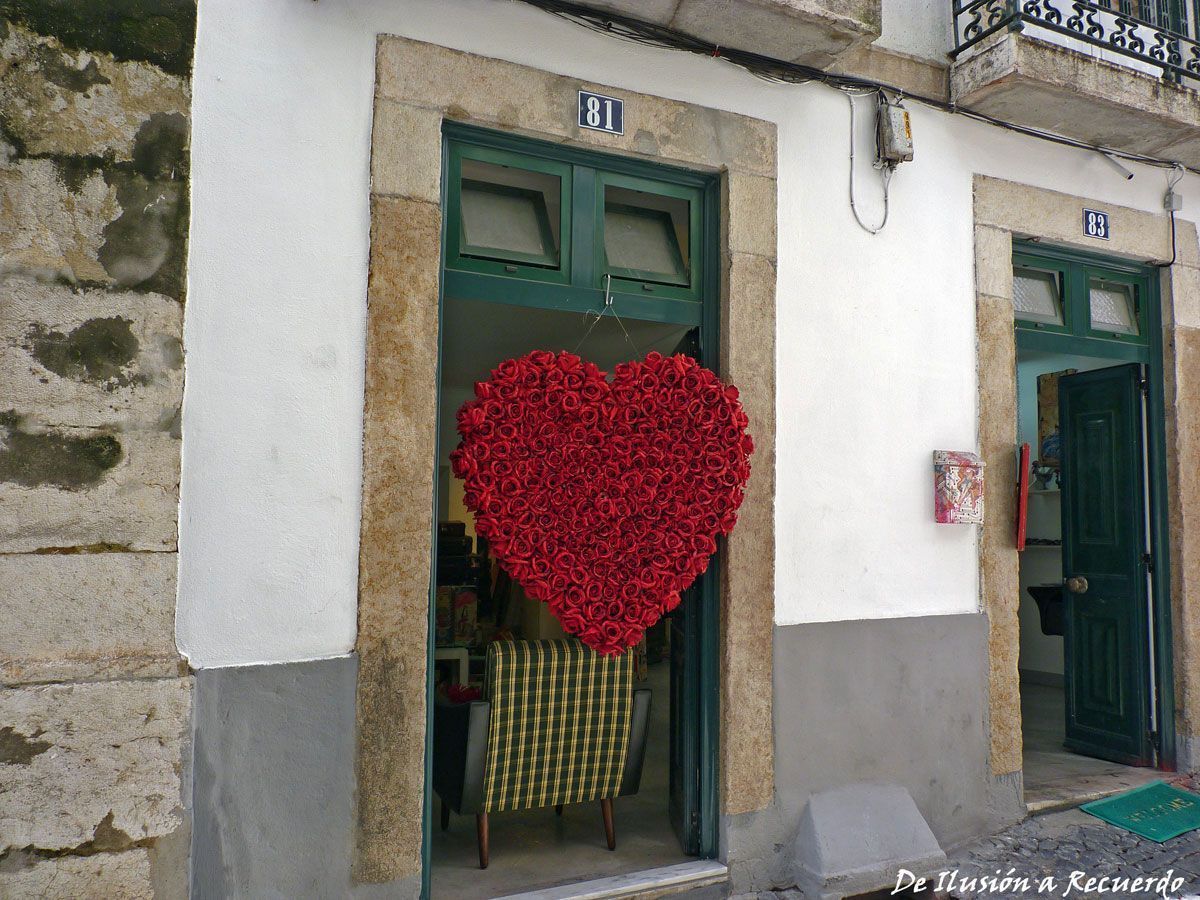
What to see in Alfama:
– The neighborhood, the oldest in Lisbon, is situated on one of the seven hills that dot this Portuguese city.
– After the 1755 earthquake it went from being a residence for aristocrats and the wealthy to becoming a humble neighborhood for fishermen and workers.
– You cannot miss the Sé Cathedral, where the traditional tram 28 passes by, the Casa dos Bicos or the Azurara Palace.
-A visit to Saint George’s Castle is essential, where you will be surprised to find, for example, a camera obscura from which to scan the neighborhood from a bird’s-eye view.
– On the night of June 12th to 13th, the feast of Saint Anthony, the patron saint of Alfama, is celebrated, but they celebrate in the streets for almost the entire month. It is the best time to discover the true essence of this place.
– Relax at dawn or during sunset at the spectacular Porta do Sol or Santa Luzia viewpoints.
More articles about Portugal:
Travel to Portugal by car: 15-day route
Portugal dos Pequenitos, a plan with kids in Coimbra
5 charming villages in Portugal
Lamego, 12 reasons to get lost in this Portuguese city
Óbidos Vila Natal, a Christmas destination
Alfama is a woman's name
Vila Viçosa, the princess of Alentejo
Porto understands you
* This article includes affiliate links. If you book something through them, it will cost you the same price, but you will help me to continue creating content with the small commission that is generated. Thank you!


